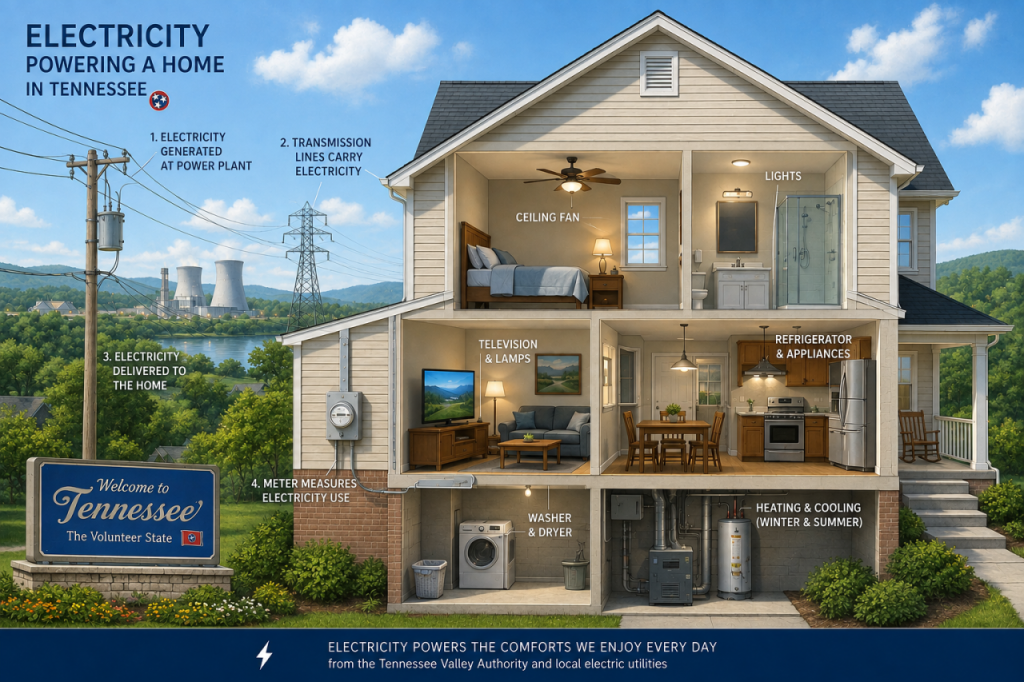
A new CRER white paper by William Plank, a CRER Research Fellow and EPB Community Economist, explores recent trends in electricity affordability in Tennessee relative to similar states. Affordability is measured by the median household’s electricity burden, or the share of its annual income spent on electricity.
Despite relatively sharp increases in prices since 2020, the average electricity burden across the comparison states has fallen since 2010 because household incomes have been rising. Specifically, the average burden across comparison states fell from 3.4 percent in 2010 to 2.6 percent in 2024. The electricity burden for Tennessee fell by one percentage point over the period and the median Tennessee household spent 2.6 percent of its income on electricity in 2024. Using standard thresholds, about 17 percent of Tennessee households were either highly or severely burdened by their electricity spending.