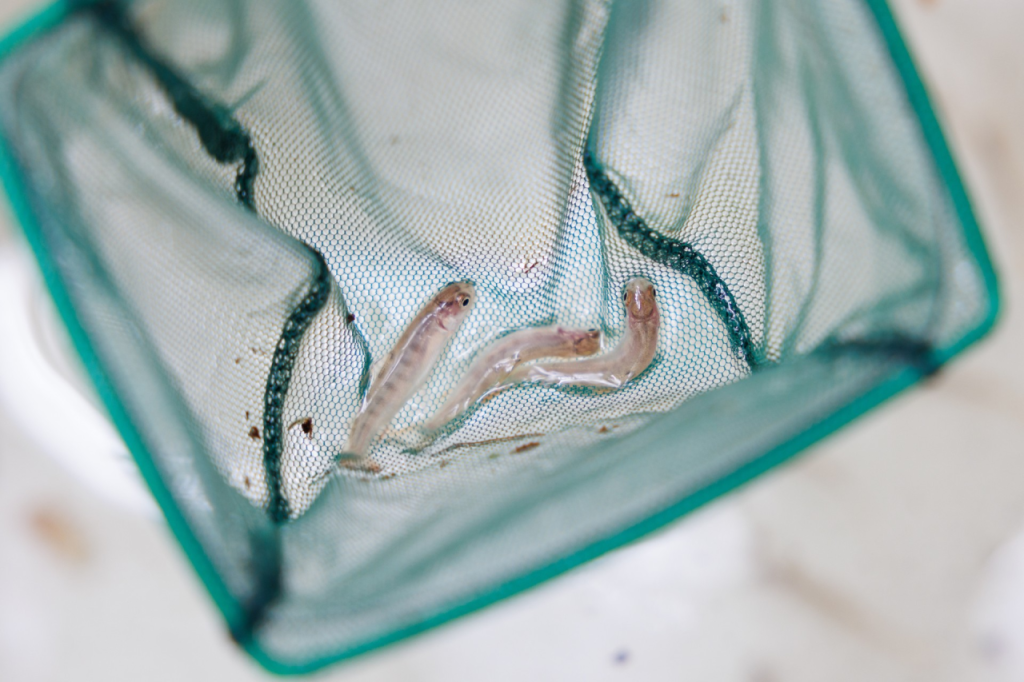
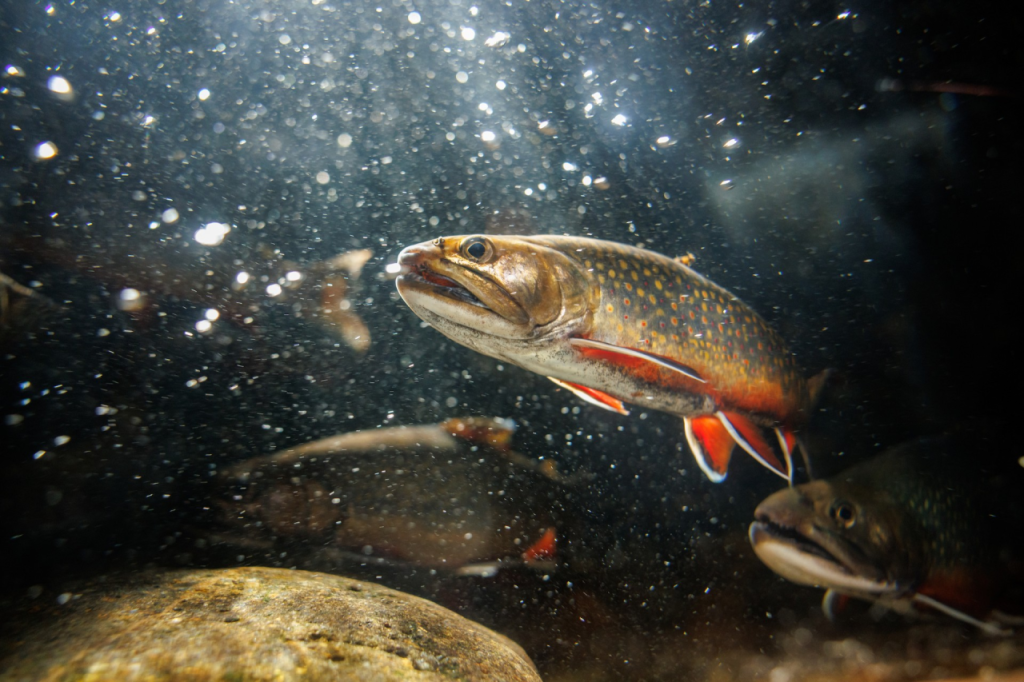
Deep within the Cherokee National Forest resides an overlooked beauty. Red-bellied wonders swim in local streams native to the Tennessee-Appalachian area. Formerly categorized as “Trash Fish,” the Southern Appalachian Brook Trout takes center stage as many organizations restore its declining populations.
Brook Trout are taken as brood stock and spawned by the Tennessee Aquarium Conservation Institute (TNACI) and other organizations for release back into their native streams.
This population of trout is native to the Tennessee region. These creatures are some of the smallest species of trout, growing to around six to eight inches in length, according to the U.S. Fish and Wildlife Service.
These fish swim in small streams filled with natural twigs, logs, and other woody debris for habitable purposes.
“They have internal biological little GPS systems within their bodies,” TNACI Conservation Manager Stephanie Chance said. “They only go into their tiny little creeks; they won’t reproduce in any other stream other than the ones they live in.”
Chance said these native trout species are often overlooked compared to other fish species found in Tennessee. This leads to many negative impacts on Brook Trout habitat and populations.
According to the TNACI website, the Brook Trout experienced environmental devastation in the 1920s and 30s and again in the 1960s and 70s due to a process called clear-cutting and mass deforestation. All the trees near the streams were cut down. This led to large amounts of dirt, sediment, and other minerals entering the streams where the trout lived, suffocating them to the point where they could no longer lay their eggs. Their local environment became uninhabitable.
Brook Trout had another obstacle: they had to compete with other non-native species of Rainbow Trout and Brown Trout introduced to the region from other waters. Fishermen sought out these other trout species for fishing.
“Even on federal lands in Tennessee,” Chance said. “Partners were killing fish to bring the other two species of trout.”
Brook Trout were largely overlooked allowing their populations to decline steadily until intervention became unavoidable. This led to multiple organizations partnering to find a solution to their rapid decline. Several wildlife resource agencies including the Tennessee Wildlife Resources Agency (TWRA), Trout Unlimited, and the U.S. Forest Service worked to restore these stream habitats and bring Brook Trout back into the ecosystem.
The Tennessee Aquarium has been working with the Brook Trout through a process called strip spawning. Marine biologists take male and female trout, mix the eggs and sperm to help them reproduce, and then raise the baby trout before releasing them back into their previous, native environment. This program has been a 10 to 15 year-long program with multiple successes. As many as 1,000 Brook Trout were released into streams.
“It was so successful in the small streams that we worked in that we essentially can’t work in those streams anymore,” Chance said.
Once released into these streams, they are monitored yearly by the TWRA.
“They monitor the streams by electrofishing,” TNACI Restoration Biologist Teresa Israel said. “They were checking these streams and seeing so many fish.”
Electrofishing is a method for counting fish in the water by sending an electric current that stuns them and then easily viewed.
Unfortunately, recent events stopped the Brook Trout release because of potential external harm to the streams. Hurricane Helene, when it hit in September 2024, impacted Brook Trout habitat conditions, so the program is on hold for now. The hurricane dumped a lot of rain washing out hatcheries and sending debris into the streams.
“Currently, a lot of our partners are trying to go back and assess the aquatic life in those streams,” Chance said.
Each year the organizations working to save the Brook Trout meet at the cold water planning meeting in January. At this year’s meeting, these organizations will evaluate the status of the release program and evaluate how badly Hurricane Helene affected the Brook Trout streams.
“Best case scenario, the damage isn’t too bad, and we can proceed as planned,” restoration biologist Teresa Israel said. “Worst case scenario, we will have to start from square one.”
EDITOR’S NOTE: This story was produced in Fall 2025 for Prof. Jim Tanner’s Solutions Journalism reporting class which allowed students to investigate and report on environmental issues being addressed in the Chattanooga area. Solutions Journalism is a journalism framework developed in 2013 to investigate and explain, in a critical and clear-eyed way, how people try to solve widely shared problems in their communities.
Leave a Reply