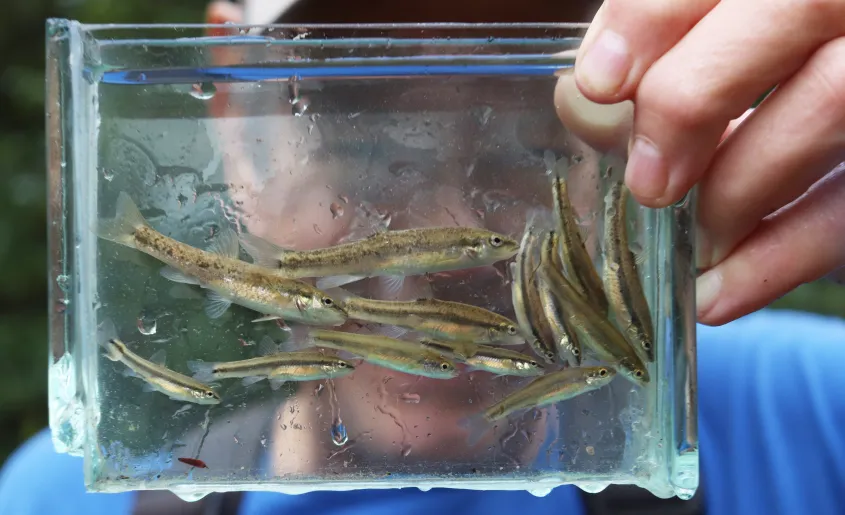
50 miles North of Chattanooga, a thumb-sized anomaly swims between the rocks and moss of the small streams on Walden Ridge. To the unknown eye, these fish, known as the Laurel Dace, could easily be overlooked or mistaken for any other small freshwater fish that is found in East Tennessee.
The rarity of Laurel Dace doesn’t come only from their size and characteristics, but the specific area they are found. Since their discovery in the 1950s, the Laurel Dace are only found in one location in the world, Walden Ridge.
The limited environment the Laurel Dace inhabit means it is a very small population. In 2011, the U.S. Fish and Wildlife Service officially listed the Laurel Dace as endangered under the Endangered Species Act (ESA). From first discovery, this species was found in only nine streams at Walden Ridge, but over the past 25 years, that number shrunk drastically. Over several decades, with continued agriculture, dry seasons, and increased sedimentation, the Laurel Dace only have a healthy population in Bumbee Creek on Walden Ridge.
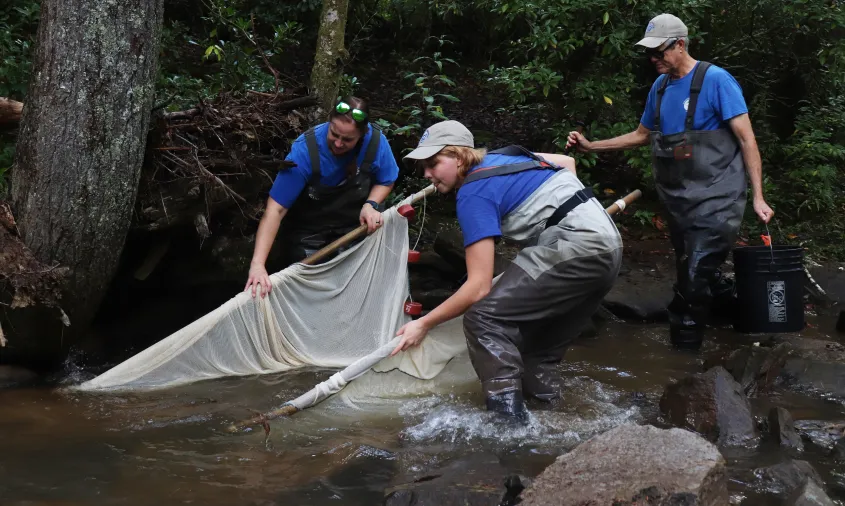
Once the fish were recognized as critically endangered, the Tennessee Aquarium and the Tennessee Aquarium Conservation Institute (TNACI) stepped in and began preservation efforts. Over time, the TNACI continued keeping a close eye on the Laurel Dace by studying their environments and behaviors. Rescues were conducted where teams traveled to Bumbee Creek and take several fish into their care for further monitoring and research. Through ongoing observations in the wild, the TNACI was able to take fast action to save the Laurel Dace when circumstances became drastic.
“Over the past 10 years, we have been very closely involved with Laurel Dace Conservation. We’ve done status surveys, habitat studies, and studied their behaviors. We’ve also brought them here into our care to try to understand how to spawn them, just in case the need ever arose. Unfortunately, last Fall in 2024, the need did arise,” said Dr. Anna George, the vice president of conservation and education at the Tennessee Aquarium.
Dr. George serves as a leading member of the Laurel Dace conservation team and has been a part of the journey since the first rescue. During an extended drought in the summer of 2024, she feared the Laurel Dace could be moments away from full extinction without the help of human intervention. That July, the TNACI took action and traveled several times to begin an emergency relocation. Dr. George explained how, as the dry season continued, the conservation became more drastic.
“When I talk about the drought, we’re talking about a creek that’s normally free-flowing with water, and instead, there were just puddles. It was stagnant, algae-filled puddles, and honestly, we’re not sure how the Laurel Dace were even surviving given how bad the conditions were on the ground.”
The emergency relocation became a life-saving success for the Laurel Dace. By September, the TNACI was confident it had relocated every single Laurel Dace they caught into their care. The fish were kept in the TNACI facility until the creeks became habitable and thriving environment for the fish again.
At the end of September in 2024, Hurricane Helene swept through North Carolina and East Tennessee, causing an excess of rainfall, allowing for the creeks on Walden Ridge to fill once again. Although conditions were improving, the Laurel Dace were kept in the TNACI’s care over the winter season to guarantee the creek’s condition would continue to stay steady and flowing. After consistent weather patterns, the decision was made to conduct the first Laurel Dace release in March of 2025.
“That was a really fun day. It’s always great when you get to release an endangered species, but particularly when you’ve been safeguarding them. We were out there with several partners two different weeks in a row,” Dr. George said. “We chose the time we did because March is before the Spring spawning event happens, so we wanted the fish to have about a month in order to stabilize back in the river and get their bearings again before they had to start on respawning.”
Around 50 adult Laurel Dace were kept at the TNACI facility for observations and had notable success during the spawning season while in human care. Around 200 baby fish joined the population after this spring’s spawning season.
Although the Laurel Dace numbers has seen improvement over the past year, conservation and awareness remain at the forefront of several minds. With recent surveys showing that population numbers continue to grow, TNACI seems hopeful for the future. The Laurel Dace shows that although small in size and numbers, they share a big story about the importance of conservation and the role each of us can play in protecting the wildlife that lives in our own backyards, without sometimes even knowing it.
Leave a Reply