
CHATTANOOGA, TENN. – The population of the Chattanooga region grew more than double the national rate from 2020 to 2025, according to a report released by the University of Tennessee at Chattanooga.
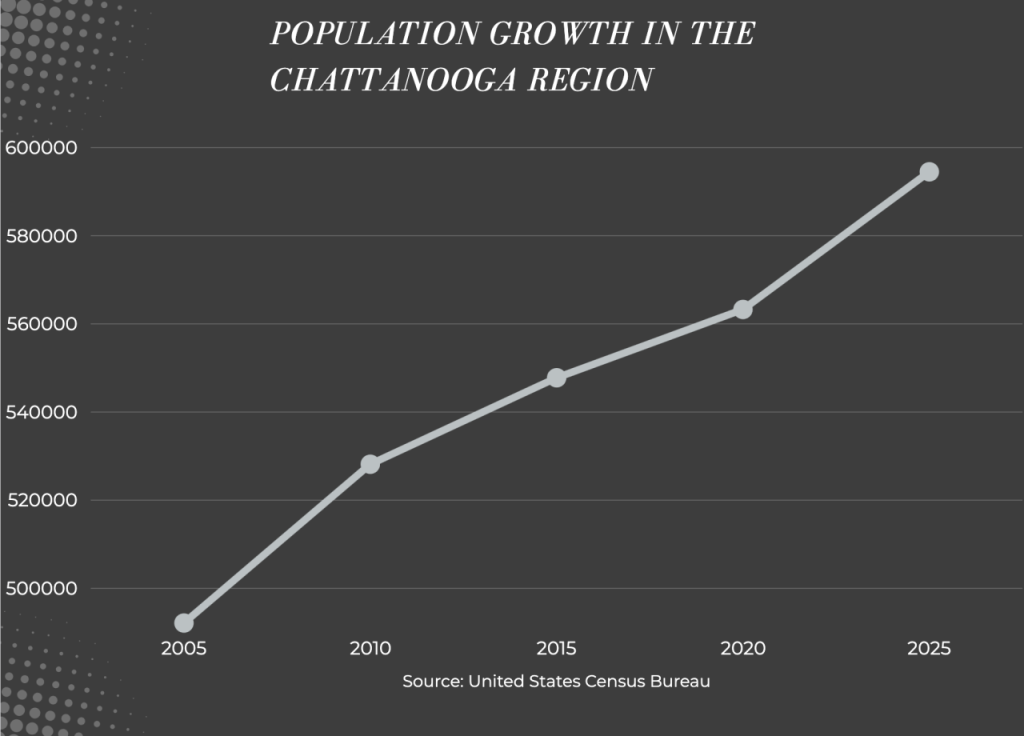
The Chattanooga, metropolitan area (including north Georgia near the state line) increased from a population of 563,291 in April 2020 to 594,530 on July 1, 2025. The region is expected to exceed 600,000 later this year, the report estimates.
Chattanooga’s metro counties grew by 5%, 31,239 residents. In comparison, the population of the United States increased by 3.1%.
The report found that Americans from other parts of the country, rather than international newcomers, was the main factor driving the region’s growth. The region’s foreign-born population still saw a 25% increase between 2020 and 2025.
The growth in the last five years is closer to the growth the region saw from 2005 to 2010, as shown in the graph below.
Chattanooga City Council Chairman Jeff Davis attributed the surge in the region’s population, and in Tennessee as a whole, to the lack of a state income tax and the overall low tax burden compared to other states. Besides taxes, he added that Chattanooga specifically offers a unique appeal to new residents.
“Even though we’re growing, we’re also not as congested as some nearby cities like Nashville or Atlanta…we still kind of have a small town feel,” Davis said.
Dr. Howard J. Wall, Director and Chief Economist of UTC’s Gary W. Rollins College of Business and publisher of the original report, shared some concerns about the rapid population growth indicated in the research.
“I think Chattanooga can continue to be a high-growth area for a while, but it depends on how well our industries do,” Wall said. “We can continue to be reliant on manufacturing, but it is more sensitive to weaknesses in the national economy than other sectors, as we have seen over the past couple of years.”
“Chattanooga’s infrastructure has been strained by the growth we’ve already had. Roads and sewers in particular are in need of upgrading and maintenance. These issues need to be addressed while also preparing the area for more growth,” Wall said.
Davis, on the other hand, said growth reflects a healthy city and brought up the benefits of a rising population.
“As our tax base grows, we have more property tax income coming into the city to pay for the services that we all benefit from,” Davis said. “Also, as our population grows, we’re able to attract different industries, you know, whether it be employers or entertainment venues.”
Leave a Reply