Dr. Anotida Chikumbu recently published a book chapter titled “The Forgotten Men: Military Welfare, Identity Politics, and African Nationalism in Southern Rhodesia c.1945–1970s,” in the book Military Welfare History Since the Eighteenth Century
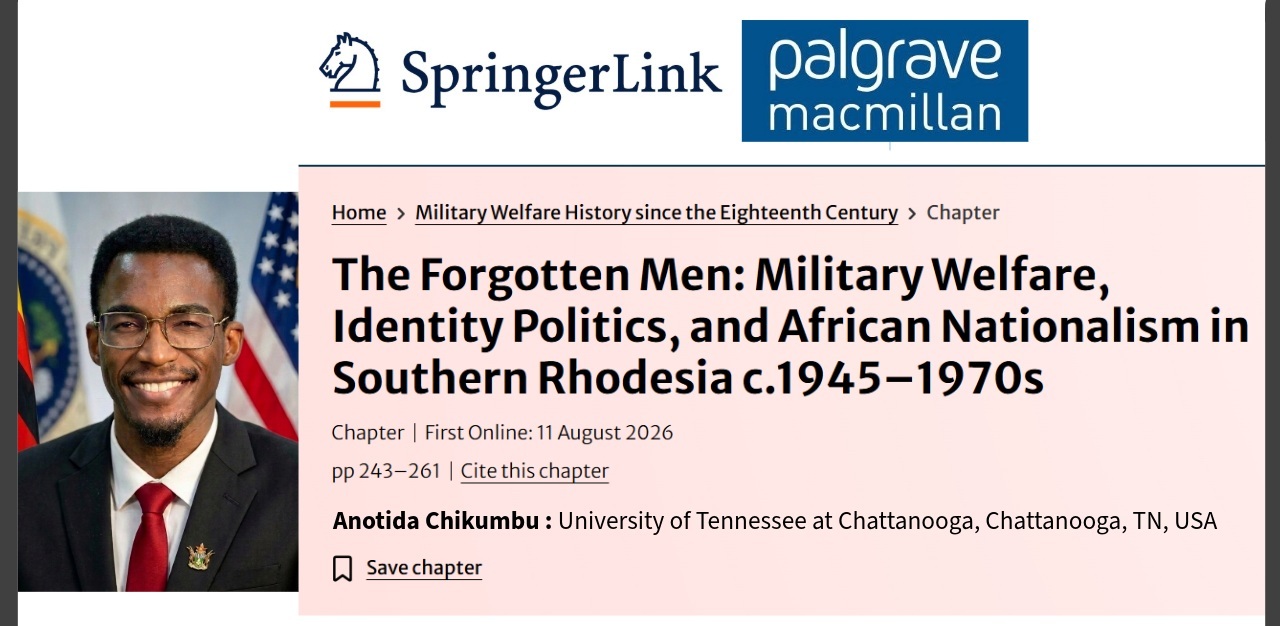
The History Department is excited to announce that Dr. Chikumbu’s chapter, “The “The Forgotten Men: Military Welfare, Identity Politics, and African Nationalism in Southern Rhodesia c.1945–1970s,” has been published in Military Welfare History Since the Eighteenth Century: War and Warfare, by Palgrave Macmillan.
This research explores how racialized inequalities in post-WWII demobilization benefits, healthcare, and land grants deeply frustrated African ex-servicemen. These broken promises ultimately served as catalyst fuel for the revival of anti-colonial politics and mass African nationalism in colonial Zimbabwe.
As Dr. Chikumbu describes, “When I first began researching this topic in Zimbabwe, I quickly noticed how little my generation knows about the massive involvement of Africans in the Second World War. Millions of African soldiers played a pivotal role in the Allied war effort, yet colonial racism systematically denied them the recognition, respect, and compensation they earned. Having previously published an article on how these men were mobilized and recruited, I am thrilled to share this new book chapter, which turns the page to examine how they were demobilized, discharged, and ultimately marginalized in Southern Rhodesia during the postwar era.
Delving into military history over the past few years has been a deeply rewarding journey. I’ve had the privilege of sharing findings from this project at Florida State University, the Naval War College, Boston College, and University College Dublin, where conversations with fellow scholars continually sharpened my focus on military welfare, identity, and African nationalism. As an active member of the Military Welfare History Network and a junior analyst with the Military Operations Research Society, bringing these ‘forgotten men’ back into the historical narrative remains one of the most compelling aspects of my work.”
Check out the new chapter here, and congratulations again, Dr. Chikumbu!