A task that used to take an accountant three hours now takes about five minutes.
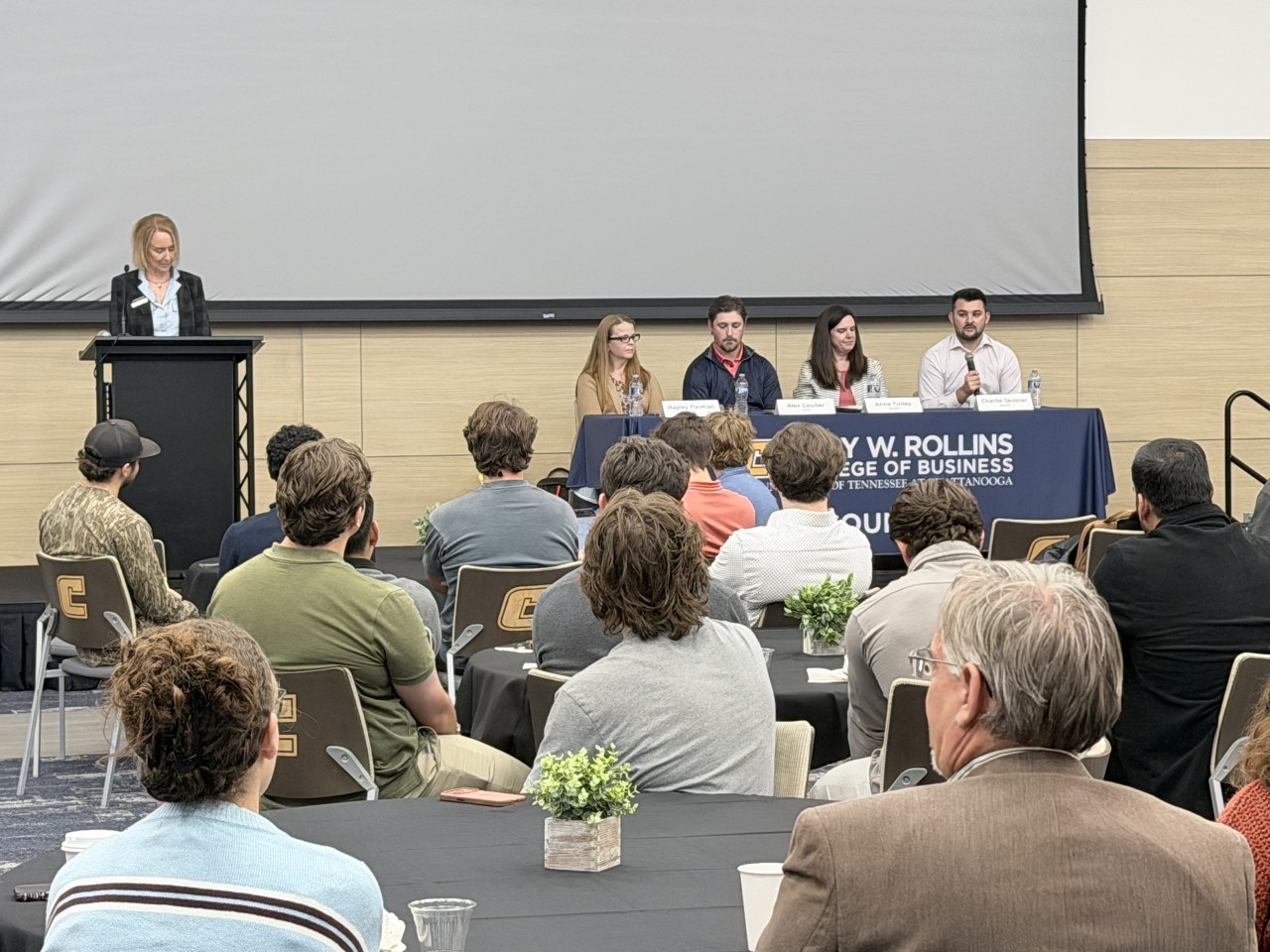
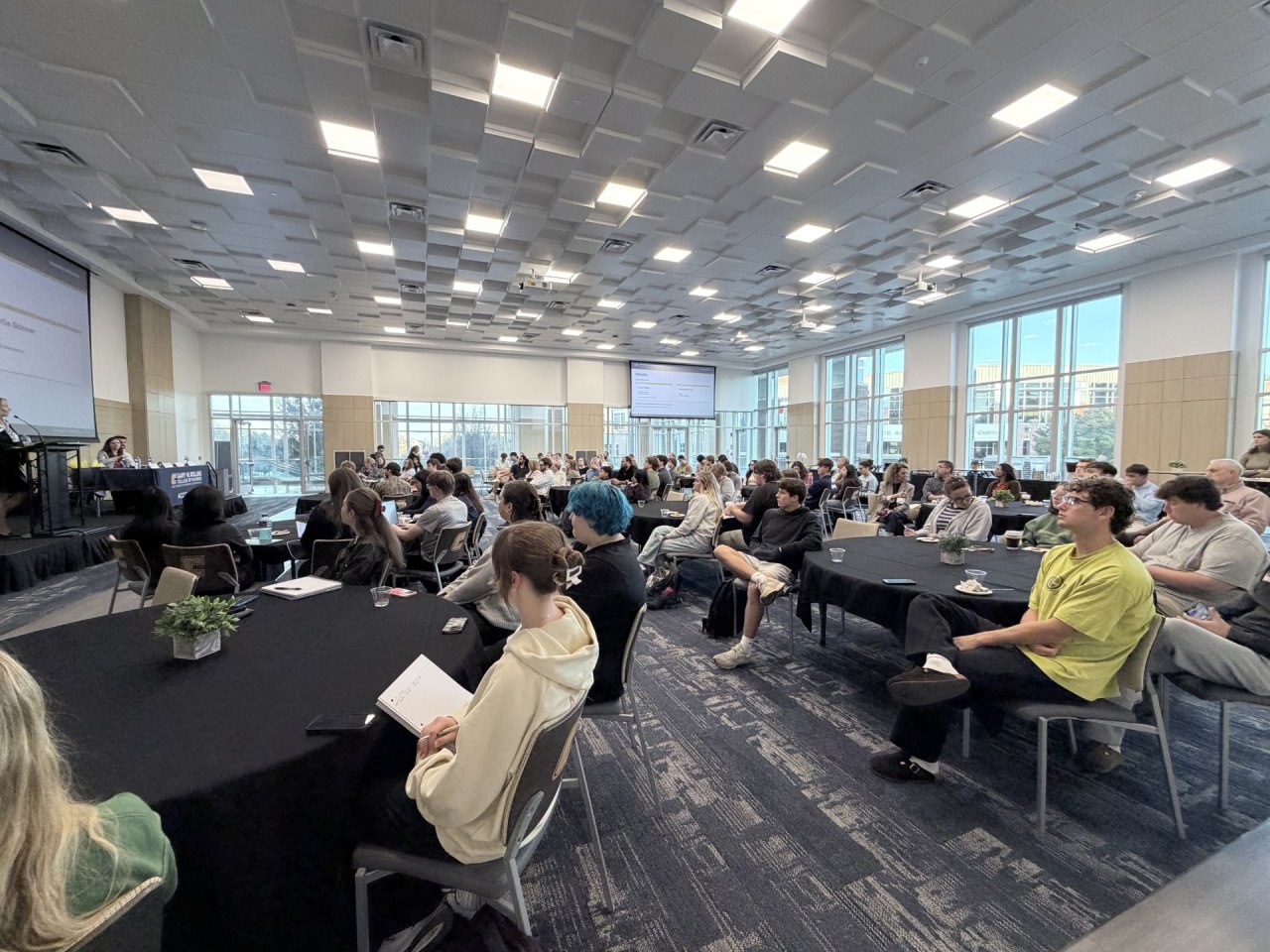
That was the example the Astec Industries team brought to campus when they joined representatives from Deloitte for a panel discussion on artificial intelligence in accounting, hosted by the accounting department at the Gary W. Rollins College of Business.
Astec built a bot to match and filter records for work-in-process inventory accounting — a tedious, high-volume process that had eaten up hours of staff time. The bot does it in minutes.
What the team does with the hours it got back is the real win.
Both sides of the table in the same room
The panel brought together Anna Turley and Charlie Skinner of Deloitte alongside Hayley Baker Parman and Alex Coulter of Astec Industries — the auditor and the client, talking openly about the same technology.
“It is very unusual to have both sides of the table collaborate in this type of environment,” said Dr. Rebecca Shortridge, head of the Accounting department at the Rollins College of Business.
That setup gave students a view they rarely get. They heard how financial statement preparers are actually deploying AI day to day and how auditors are adjusting to it.
So, what risks does an auditor have to consider when a client is leaning heavily on AI?
The profession is working through that in real time.Students got to watch both sides reason through it together rather than hear one perspective in isolation.
The counterintuitive takeaway: fundamentals matter more now
The expectation going in might be that AI reduces the need for technical accounting knowledge. If you can look it up, why learn it?
All four panelists strongly disagreed.
Graduates used to have roughly three years to grow from a new hire into a seasoned staff member, picking up technical judgment gradually along the way. That runway has compressed. Now, students go from being seniors in college to seniors in a firm faster than they used to.
“Learning fundamental accounting skills may be more important now than before,” Dr. Shortridge said, summarizing the panel’s consensus. “They don’t have time to build up their skills over time.”
AI didn’t remove the need for expertise. It removed the grace period for acquiring it.
Communication became a technical skill
AI handles more of the preparation work, so young accountants are in front of clients much sooner in their careers. That changes what the job requires on day one.
“They must be able to communicate and add value to the discussions,” Dr. Shortridge said.
A first-year accountant has to be able to run an analysis andexplain what it means in a room full of decision-makers . The soft skill is now the hard requirement.
What the work looks like now
The Astec example is instructive precisely because it’s unglamorous. No one built a bot to replace an accountant. They built one to handle record matching so the team could spend focus on decisions that require judgment.
That’s the pattern the panel described across both organizations: AI absorbing the repetitive, verifiable portions of the work, and people moving up the value chain into analysis, interpretation and client conversation.
Alex Coulter, a senior cost accountant at Astec, sees it most often in data analysis. “I often format large reports into usable information,” he said. “And I find the AI does very well with doing this in a timely manner.”
But speed introduces its own risk.
“Although AI may be doing the task, we have to own the results,” he said. “This also means that understanding the work you or the AI is performing is crucial. Relying only on AI and not being able to check its work could lead to spreading bad information. In accounting, this could lead to audit issues.”
For students, that reframes what the profession is. It’s less time on the mechanics, and more time on the questions that don’t have a lookup answer.
The profile of the graduate who thrives
Dr. Shortridge encourages students entering the workforce to master three skills:
- Understand technical accounting knowledge
- Get comfortable with AI and technology
- Be able to communicate
The panel agreed the profession has gotten less forgiving about the gap. For students willing to build all three skills while they still have the structure of a classroom to do it in, the job on the other side looks better than it used to.
The upside is real, though. An AI-driven profession is a more dynamic one. The work that remains after the automation is the interesting work: shaping insight, advising clients and influencing decisions. Accountants spend less time producing numbers and more time explaining what they mean.
By at least one measure, they’re already ahead. Coulter graduated just as AI arrived in the profession and has had to learn it on the fly, so he was impressed with the room’s fluency in AI.
“I was surprised with how advanced most of the students’ knowledge is already about AI,” he said. “I feel I learned as much from them as they did from me. The passion to learn AI now in college will set these students up for fast success in real-world job scenarios.”
Let’s see where business will take you. The best accountants don’t just produce the numbers — they explain what the numbers mean. At UTC’s Gary W. Rollins College of Business, accounting students build technical depth, fluency with the technology reshaping the field and the communication skills to put both to work from day one.

Leave a Reply